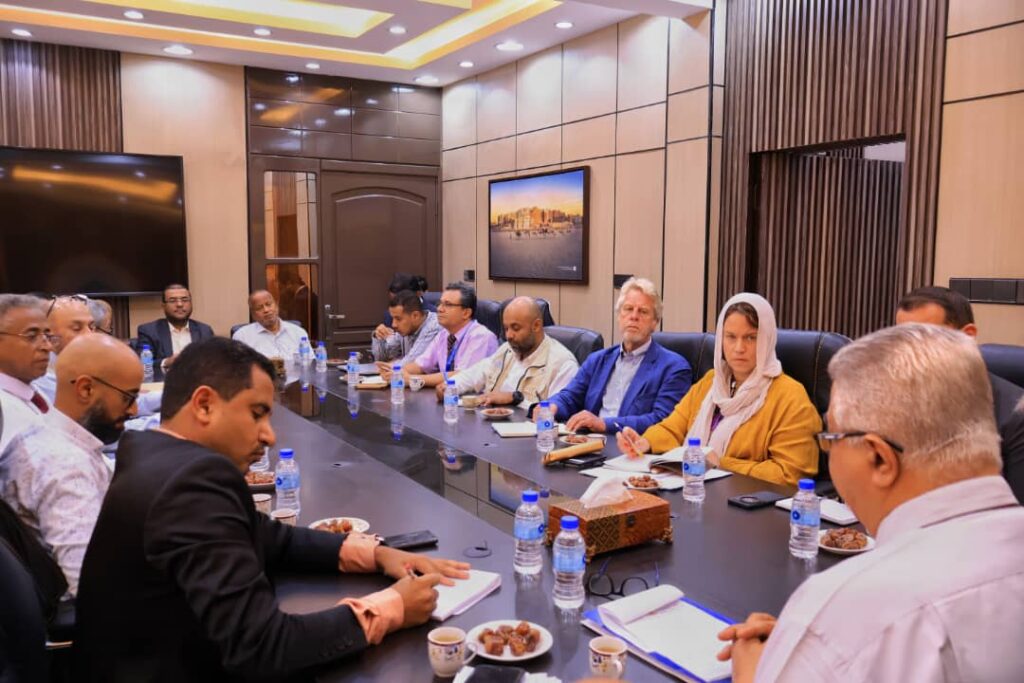
In a move reflecting an innovative approach to harnessing Yemen’s natural resources, Hadhramout University today presented to a delegation from the Embassy of the Kingdom of the Netherlands and the Food and Agriculture Organization of the United Nations (FAO) a project on Integrated Water Resources Management in Hajar District, prepared by the University’s Center for Environmental Studies and Water Resources. The University also presented a second project aimed at transforming Wadi Hajar floodwaters into a strategic resource to support aquaculture, food security, and sustainable development. The project, proposed by the Faculty of Environmental Sciences and Marine Biology, is supported by the Dutch Government and implemented in partnership with FAO.
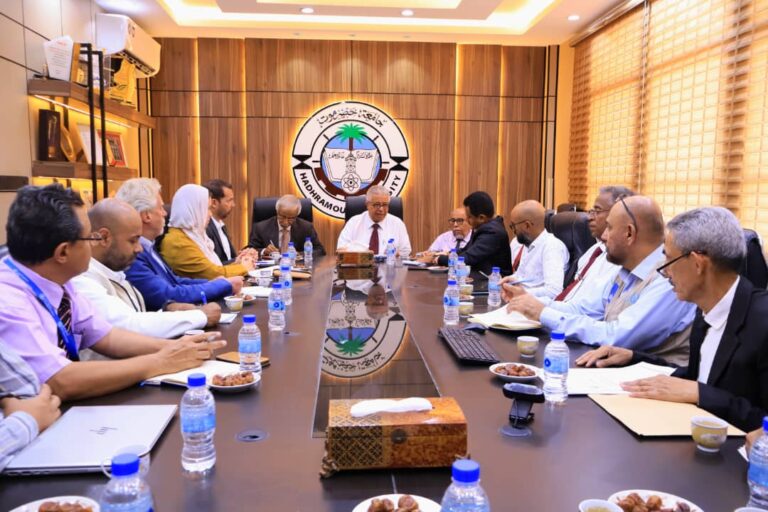
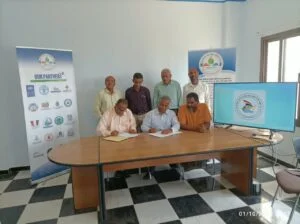
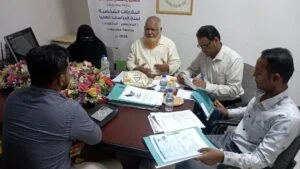
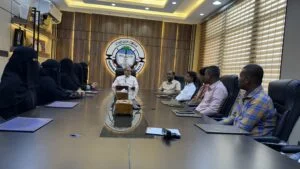
The meeting, hosted at Ali Ahmed BaKathir Hall at the University Presidency, was held within the framework of strengthening partnerships between Yemeni academic institutions and international organizations supporting environmental and water-related development initiatives.
During the meeting, the Faculty of Environmental Sciences and Marine Biology delivered an introductory presentation highlighting its academic specializations and research programs in marine fisheries, aquaculture, and food technology. The Dean of the Faculty, Prof. Dr. Khaled Awadh Al-Rubaki, affirmed that the Faculty represents a national center of expertise in environmental sciences, nutrition, and marine biology, noting that it includes nearly 50 PhD holders specializing in environmental, food, and marine sciences.
Prof. Al-Rubaki called for sustained support from international organizations to further develop students’ skills, establish long-term partnerships, and create advanced laboratories that keep pace with scientific and technological developments in the Faculty’s fields.
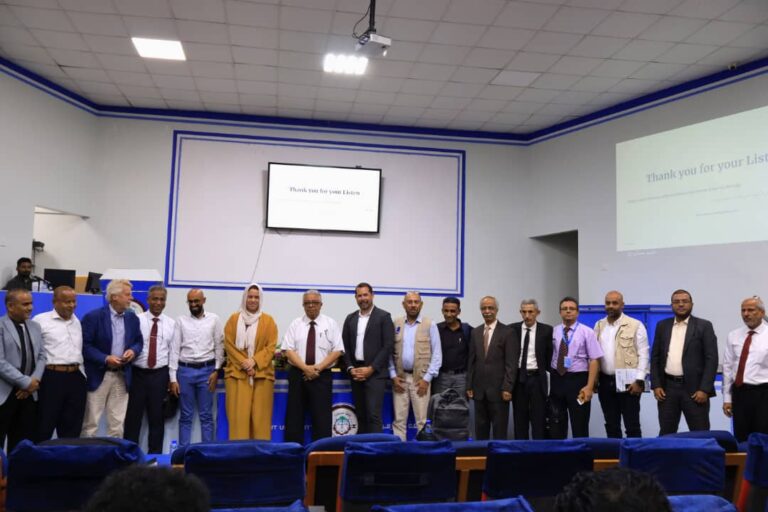
In a detailed presentation, the Director of the Center for Environmental Studies and Water Resources, Prof. Dr. Khaled Saleh Bawahidi, outlined an integrated plan for water resource management in Wadi Hajar. He explained that the project employs a “dual engineering” approach, combining direct field implementation with long-term strategic planning to ensure sustainability and maximize resource utilization.
Prof. Bawahidi noted that Wadi Hajar receives massive annual floodwater flows estimated at millions of cubic meters, emphasizing that investing these waters in aquaculture projects could significantly enhance food security rather than allowing these resources to go unused.
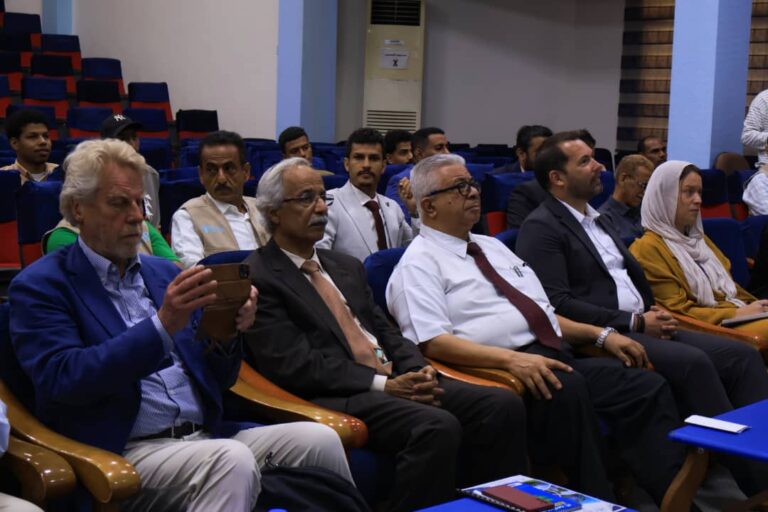
He added that the project includes field surveys and specialized technical analyses to monitor water resources and identify optimal sites for development projects within a comprehensive vision that could later expand to other coastal areas of Yemen.
For his part, Dr. Ahmed Ali Balqadi, Technical Director of the Nile Tilapia Aquaculture Project, presented an overview of technical support mechanisms, capacity-building programs, and operational services related to Nile tilapia farming. He explained the biological, environmental, and economic reasons behind selecting this fish species, noting that the project contributes to job creation, encourages aquaculture in other valleys, and supports expansion into Yemen’s extensive marine environments.
He also reviewed the project phases, including infrastructure development, pond construction, artificial hatchery systems, operational sustainability measures, and the design of training programs targeting students and faculty members in sustainable aquaculture.
The Deputy Ambassador of the Netherlands, Mr. Bart Fienstra, emphasized the importance of effective water management through building international cooperation networks and affirmed that the Embassy would facilitate collaboration with several Dutch universities.
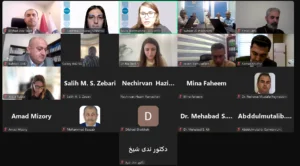
The Dutch delegation also met with students of the Faculty of Environmental Sciences and Marine Biology to discuss online training programs in remote sensing, an area receiving particular support from the Dutch Embassy. Students expressed their appreciation for the initiative and highlighted the importance of acquiring remote-sensing skills to support academic studies and scientific research.
The Dutch Ambassador praised the academic and organizational quality of the presentations delivered during the meeting. He affirmed that the strategic vision presented by Hadhramout University strengthens the project’s prospects for international support due to its reliance on clear scientific studies and well-developed implementation plans.
In the same context, Ms. Winnie van der Vaal, First Secretary for Water Management at the Dutch Embassy, spoke to students about the benefits of remote-sensing platforms and their applications in environmental and water-resource management.
Meanwhile, Mr. Najeeb Mohammed Ahmed, representative of the Ministry of Water and Environment, commended the data presented by Hadhramout University, noting that it would significantly facilitate project implementation efforts for both the Ministry and donor organizations.
For his part, the Vice President of Hadhramout University for Academic Affairs, Prof. Dr. Abdullah Saleh Babair, praised the continued Dutch support for the University, noting that previous cooperation—particularly in supporting the Faculty of Medicine and Health Sciences—had contributed to establishing a long-term academic and developmental partnership.
Prof. Dr. Babair also commended the effective partnership with FAO in implementing projects funded by the Dutch Government at the Faculty of Environmental Sciences and Marine Biology and the Center for Environmental Studies and Water Resources.
He affirmed that the Wadi Hajar project represents a unique development model integrating scientific research with local development needs, emphasizing that investing water resources in sustainable, productive projects could contribute to addressing food security and unemployment challenges in Yemen. He added that the project could serve as a replicable model for other valleys and coastal regions amid growing demand for innovative solutions in water management and sustainable economic development.
He further noted that the University has re-established the Honey Bee Center and is currently implementing development projects for it, calling on Dutch partners and FAO representatives to support these initiatives in light of the global reputation of Hadhrami honey as one of the world’s finest honey products.
The meeting was attended by several officials and specialists from the Ministry of Foreign Affairs, FAO, the Dutch Embassy, the Water Resources Authority, and Hadhramout University.