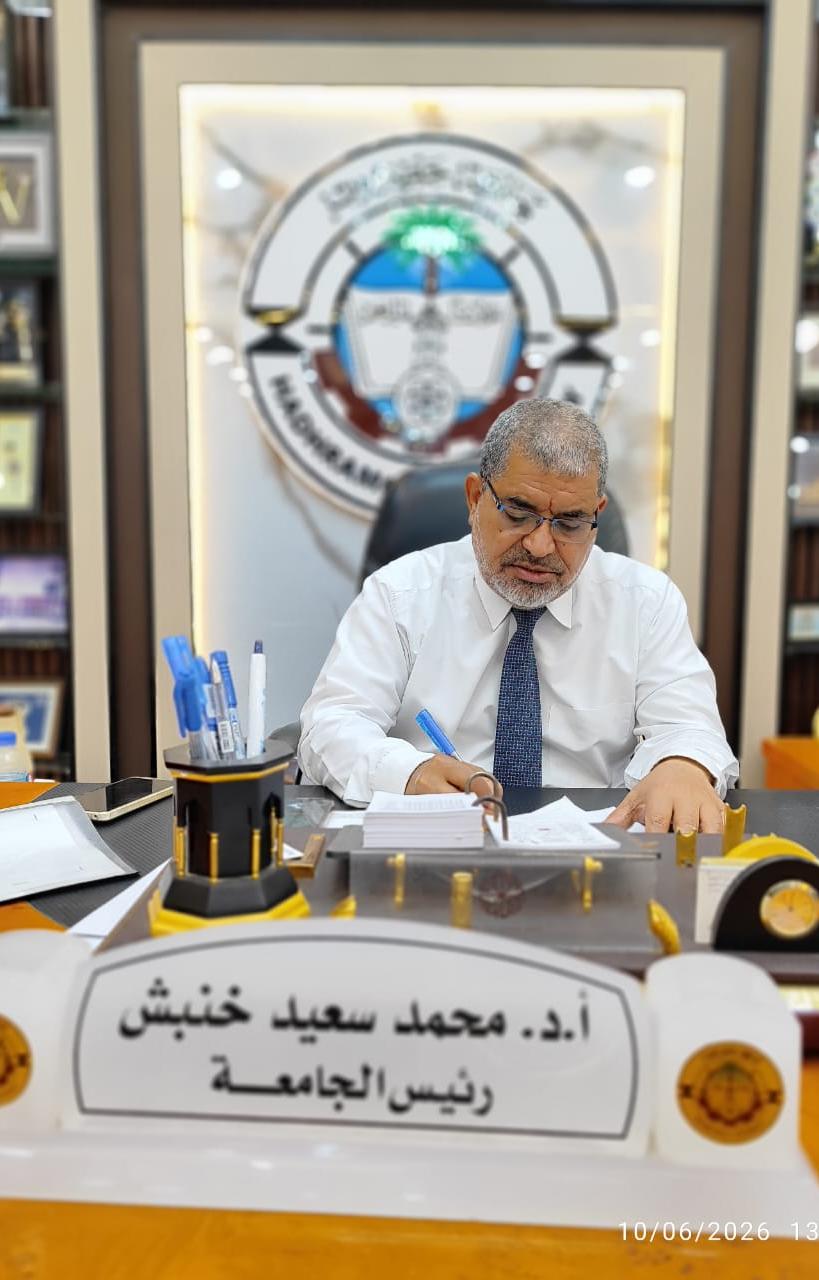
The President of Hadhramout University, Prof. Dr. Mohamed Saeed Khanbash, affirmed that international cooperation is a highly strategic option for Yemeni universities at this stage, given the economic, technological, and academic challenges facing the higher education sector. He emphasized that such cooperation contributes to improving the quality of education and scientific research, enhancing the efficiency of academic and administrative staff, and strengthening institutional capacities.
This statement was made during an interview conducted by the Fanar Media Foundation, based in London, in which he noted that Hadhramout University represents a distinguished model in this field. The university has successfully established a broad network of academic partnerships with reputable international universities and institutions in Malaysia, Brunei, and Indonesia, in addition to activating student exchange programs and organizing joint scientific events.
He further stated that the university is also working to strengthen its internationalization efforts by participating in European Union programs such as Erasmus+ and Horizon Europe, and by engaging in international projects including YHELD, MOVE, and COMMO IX.
Dr. Khanbash pointed out that international academic partnerships play a pivotal role in enhancing the resilience of educational institutions and ensuring the continuity of the academic process. This is achieved through supporting digital transformation, expanding the use of e-learning platforms, developing academic and administrative infrastructures, as well as promoting joint scientific research and faculty training programs.
In his message to European universities, Dr. Khanbash called for viewing cooperation with Yemeni universities as a reciprocal partnership based on the exchange of knowledge and expertise. He stressed that Yemen possesses unique cultural and environmental characteristics that offer broad opportunities for research collaboration in fields such as heritage studies, renewable energy, marine sciences, and sustainable development.
He concluded by affirming that Yemeni universities, despite existing challenges, continue to fulfill their academic and national mission. He highlighted that international support for higher education in Yemen would contribute to safeguarding human capital, enhancing stability, and supporting development and reconstruction efforts.