On the Sidelines of the World Chinese Language Conference 2026: Toward a National Initiative for Chinese Language Education in Yemen and Drawing on Leading Arab Experiences
By Dr. Mohammed Al-Ahmadi
Cultural Counselor, Embassy of the Republic of Yemen in the People’s Republic of China
Beijing – November 2026
Languages are no longer merely tools for communication and mutual understanding among nations. In today’s interconnected world, they have become bridges to knowledge, gateways to civilizations, and fundamental pillars for building scientific, economic, and cultural partnerships between countries. Nations that seek to shape the future do not limit themselves to strengthening diplomatic and commercial relations with international partners; they also invest in preparing generations capable of understanding other languages and cultures, engaging with global scientific and developmental experiences, and benefiting from the opportunities created by rapid global transformation.
Against the backdrop of the People’s Republic of China’s growing international influence and its remarkable advances in economics, technology, industry, and scientific research, the Chinese language is increasingly acquiring strategic importance. It is not simply a language spoken by hundreds of millions of people; rather, it provides access to a vast intellectual, cultural, and economic ecosystem that increasingly influences many aspects of modern life.
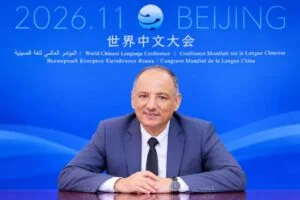
My participation in the World Chinese Language Conference 2026, hosted in Beijing this November under the patronage of China’s Ministry of Education and attended by senior officials, experts, academics, and representatives of educational institutions from around the world, offered a valuable opportunity to reflect on the future of language education and to consider the promising opportunities that Chinese language learning could provide for future generations of Yemenis.
The conference theme, “Chinese: More Than a Language,” encapsulated a profound vision that extends beyond the traditional concept of language instruction. It emphasized that learning Chinese is no longer an end in itself, but rather a means of fostering intercultural dialogue, promoting knowledge exchange, and expanding avenues for scientific, cultural, and economic cooperation between China and the rest of the world.
Amid the discussions on the future of Chinese language education and its global expansion, one question emerged prominently in my mind: Why does Yemen not yet have a national project for Chinese language education, one that builds upon the deep historical ties between Yemen and China, draws lessons from successful Arab experiences, and opens new opportunities for Yemeni youth in education, employment, and future development?
Arab Experiences in Chinese Language Education: Diverse Pathways Toward a Shared Future
Interest in teaching Chinese is no longer confined to Asian countries or specialized academic institutions. In recent years, a growing number of Arab countries have recognized its importance in strengthening ties with China and benefiting from opportunities for scientific, economic, and cultural cooperation.
Notable examples include Saudi Arabia, Egypt, and Morocco, where educational institutions have expanded Chinese language programs, strengthened cooperation with Chinese universities and educational centers, and created new opportunities for students and researchers to learn the language and engage with Chinese culture.
In Egypt, which has a long-standing tradition of Chinese language instruction, universities such as Ain Shams University and Cairo University have produced generations of specialists in Chinese language, translation, and Chinese studies. These efforts have been complemented by new academic partnerships and pilot initiatives introducing Chinese language instruction in selected schools.
In Morocco, Chinese language education has steadily expanded through university programs, language centers, and academic and cultural cooperation with Chinese institutions, reflecting a growing commitment to strengthening communication and collaboration with China.
Meanwhile, Saudi Arabia has taken significant steps toward integrating Chinese into its educational system. Initiatives include expanding Chinese language instruction in schools, recruiting hundreds of Chinese teachers, training Saudi educators, and enhancing educational exchanges with Chinese institutions. In April 2025, the Saudi Ministry of Education announced the introduction of Chinese language courses in 174 public intermediate schools, with plans to reach more than 600,000 students by 2030.
These experiences, despite their differing circumstances and development trajectories, demonstrate a growing Arab recognition of Chinese not merely as an additional school subject but as a strategic investment in human capital and a tool for enhancing Arab engagement in global knowledge and international cooperation.
The Saudi Experience: When Future Vision Becomes Educational Policy
What makes the Saudi experience particularly noteworthy is not only its scale but also the vision behind it. Chinese language education evolved from a limited educational option into a strategic project investing in future generations and preparing them to engage with one of the world’s leading centers of science, technology, and economic development.
This raises an important question: if neighboring Arab countries, led by Saudi Arabia, recognize the value of preparing generations proficient in Chinese, why should Yemen not benefit from these experiences and establish its own educational pathway tailored to its circumstances, resources, and future needs?
The objective is not to replicate any model in its entirety. Every country has its own priorities and capacities. Rather, the goal is to draw inspiration from the philosophy underlying these successful initiatives and their ability to translate long-term vision into practical educational programs.
Major national projects do not necessarily begin with vast financial resources. They begin with a clear idea, genuine commitment, carefully planned steps, and sustainable institutional partnerships.
Yemen’s Experience: Promising Institutional Efforts that Deserve Support
Despite the exceptional challenges facing Yemen’s education sector, recent years have witnessed important efforts to strengthen academic and cultural cooperation with China and to create opportunities for Chinese language education within Yemeni universities.
These efforts have been pursued within the framework of the Ministry of Higher Education and Scientific Research’s strategy to expand international partnerships and enhance educational opportunities for Yemeni students.
Working alongside Yemeni universities and relevant Chinese institutions, the Ministry has supported educational cooperation initiatives and encouraged efforts to introduce Chinese language programs while drawing on Chinese expertise in curriculum development and capacity building.
Among the most notable examples is the experience of Aden University, which has taken important steps in offering Chinese language instruction through its Faculty of Languages and Translation.
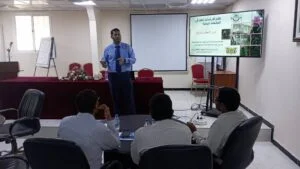
Similarly, Hadhramout University, through its Language Institute, has launched free Chinese language courses and scholarship opportunities aimed at creating new educational pathways for students and language enthusiasts while laying the foundation for future expansion.
Likewise, Saba Region University has broadened opportunities for foreign language education through Chinese language programs offered by its Center for Languages and Translation.
These efforts deserve recognition. The Ministry of Higher Education, university leaderships, and academic staff have demonstrated remarkable commitment to educational development and international engagement despite limited resources and challenging circumstances.
However, these initiatives should not remain isolated efforts. They can serve as the foundation for a comprehensive national program uniting the Ministry, universities, the cultural attaché, and relevant Chinese institutions to ensure broader impact and long-term sustainability.
Seventy Years of Yemeni-Chinese Friendship: New Horizons for Cooperation
Relations between Yemen and China are built upon seven decades of friendship, cooperation, and mutual respect, encompassing political, economic, developmental, cultural, and educational collaboration.
Chinese scholarships and academic cooperation have played a vital role in educating generations of Yemeni professionals whose expertise has contributed significantly to national development.
Yet today’s changing realities call for broader ambitions. Rather than focusing solely on study opportunities in China, Yemen can work toward establishing a domestic linguistic and educational foundation that enables larger numbers of students to access Chinese language learning and the opportunities associated with it.
Opportunities to learn Chinese should not be limited to those fortunate enough to study abroad. Through joint educational programs, institutional partnerships, and modern digital learning technologies, Chinese language education can become accessible to students across Yemeni schools, institutes, and universities.
Toward a National Yemeni Initiative for Chinese Language Education
Advocating a national Chinese language education initiative does not diminish the many urgent challenges facing Yemen’s educational sector. Rather, it reflects the belief that preparing for the future must remain part of our national vision.
A gradual and realistic national program could begin by:
• Expanding existing Chinese language programs in Yemeni universities.
• Establishing specialized Chinese language centers.
• Preparing and training Yemeni Chinese-language instructors.
• Benefiting from Chinese expertise in curriculum and teaching-resource development.
• Exploring pilot programs that introduce Chinese as an elective subject in selected secondary schools.
• Utilizing digital learning platforms and distance-learning opportunities.
• Leveraging the expertise of Yemeni graduates from Chinese universities.
• Strengthening cooperation with Chinese universities and educational institutions.
Such a project does not require hundreds of schools or thousands of teachers at the outset. What it requires is a realistic vision, strategic planning, strong partnerships, and long-term commitment.
A modest beginning guided by a clear vision is far more valuable than ambitious ideas that remain unrealized.
Chinese Language: An Opportunity for Knowledge, Employment, and Development
The value of learning Chinese extends well beyond cultural exchange. It offers practical opportunities in higher education, scientific research, international trade, translation, logistics, technology, industry, tourism, and international cooperation.
As China continues to play a central role in the global economy, proficiency in Chinese can open doors for Yemeni youth to study at Chinese universities, participate in research and training programs, pursue professional opportunities, and contribute to strengthening economic and investment relations between Yemen and China.
Equally important, cultivating Yemeni professionals who combine academic expertise with Chinese language proficiency will help facilitate knowledge transfer, technological cooperation, reconstruction efforts, and broader development initiatives in the years ahead.
Learning Chinese does not diminish the importance of Arabic or Yemen’s cultural identity. On the contrary, it enriches knowledge, enhances global engagement, and equips future generations with valuable international competencies.
Confident nations are those most capable of engaging with other cultures and transforming openness into opportunities for progress and development.
From Beijing: A Call for Renewed Investment in Yemen’s Human Capital
The discussions and perspectives presented at the World Chinese Language Conference 2026 reaffirmed that language education has become an essential component of international cooperation and that building bridges between nations begins with investing in people, expanding knowledge, and promoting intercultural understanding.
If countries such as Saudi Arabia, Egypt, and Morocco have made meaningful progress in Chinese language education, Yemen, with its rich history, deep-rooted relationship with China, and promising young population, is equally capable of developing its own model, aligned with its realities and aspirations.
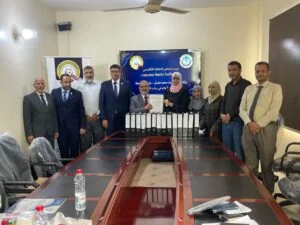
The experiences of Arab countries provide valuable lessons in long-term planning and human-capital investment. Likewise, the initiatives undertaken by Yemen’s Ministry of Higher Education and by institutions such as Aden University, Hadhramout University, and Saba Region University demonstrate that academic vision and determination can create opportunities even under difficult circumstances.
Today, a genuine opportunity exists to build a Yemeni national project that benefits from regional experiences and international partnerships while providing Yemeni youth with additional tools for learning, competitiveness, and professional success.
As Cultural Counselor at the Embassy of the Republic of Yemen in Beijing, I hope this vision can become one of the promising areas of future academic and cultural cooperation between Yemen and China.
Ultimately, the most important message emerging from the World Chinese Language Conference 2026 is that language is no longer merely a means of communication. It has become a pathway to knowledge, a platform for partnership, and an instrument for shaping the future.
As Yemen and China celebrate seventy years of diplomatic relations, this milestone presents a historic opportunity to elevate these relations through educational and cultural cooperation. Chinese language education could become one of the most meaningful projects reflecting our shared aspiration for a future built on greater understanding, collaboration, and opportunity.
For seventy years, Yemen and China have built bridges of friendship. The time has come to strengthen those bridges through the language of knowledge and learning, giving future generations of Yemenis the opportunity to cross them toward broader horizons of ambition and possibility.
The question today is not whether the Chinese language deserves a place within our educational institutions. The more important question is:
When will we begin transforming this opportunity into a national project that opens the doors of the future for our youth?
Dr. Mohammed Al-Ahmadi
Cultural Counselor
Embassy of the Republic of Yemen to the People’s Republic of China
Beijing – November 2026