Al Mukalla / University Media
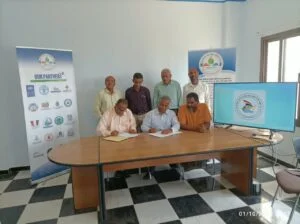
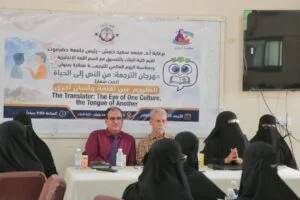
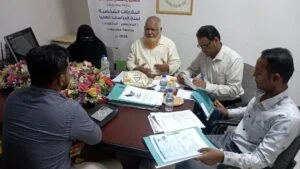
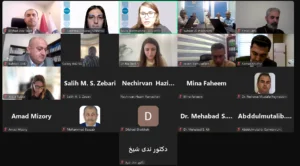
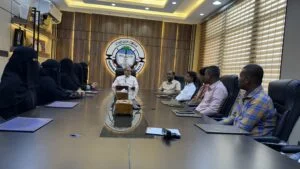
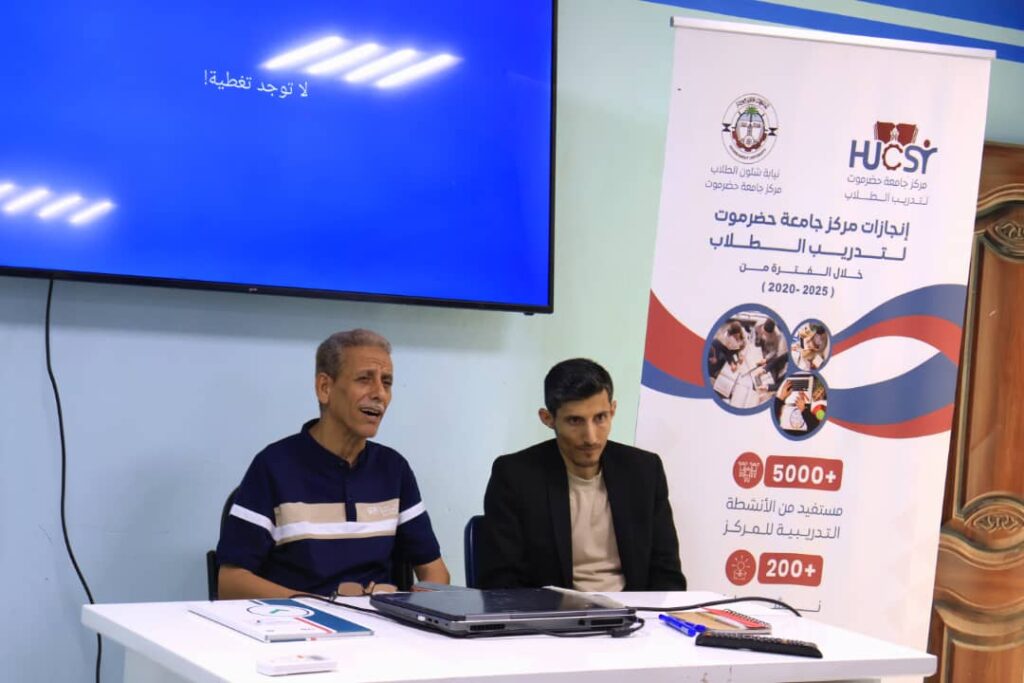
The General Media Administration at Hadhramout University recently organized a discussion session titled “Fact-Checking in the Digital Age” in partnership with the Arab Reporters for Investigative Journalism (ARIJ), and in cooperation with the University Student Training Center. The session was facilitated by trainer Ahmed Al-Ashwal and attended by students and graduates of the Media Department at the Faculty of Arts.
The session addressed key concepts related to information verification, including the fundamentals of fact-checking, distinguishing between facts, opinions, and rumors, and handling news sources during times of crisis. It also focused on digital verification tools, such as reverse image search, video verification techniques, metadata tracking, and social media account analysis. In addition, the session introduced ARIJ’s fact-checking methodology, which is based on open-source intelligence (OSINT), evidence documentation, and the preparation of comprehensive verification reports prior to publication.
The discussion further highlighted patterns of locally prevalent misinformation, identifying common forms of false news circulating in Hadhramout and outlining practical methods for debunking them using clear and audience-friendly language. Participants engaged in hands-on exercises by verifying circulating news items and images, applying verification tools to assess their accuracy. They also discussed the challenges facing fact-checking in the local media environment, including limited source transparency, the rapid spread of rumors via platforms such as WhatsApp and Facebook, and the lack of reliable official data sources.
At the conclusion of the session, trainer Ahmed Al-Ashwal emphasized that fact-checking is not a journalistic luxury but a social responsibility, urging students to adopt a mindset of professional skepticism and to verify all information before sharing it.
In the same context, Dr. Adeeb Al-Shatiri, Acting Director General of the Media Administration at Hadhramout University, explained that the session forms part of a broader plan aimed at enhancing critical thinking and combating misinformation in cooperation with ARIJ. He noted that these efforts seek to strengthen the professional competencies of students, journalists, and media practitioners, while reinforcing the university’s role within the wider Hadhramout community.
For their part, participating students expressed their appreciation for the session. Mohammed Al-Batoul, a Media Department student, noted that the training provided valuable knowledge on verification and information research, enabling participants to distinguish between misleading and accurate data. He described the session as a significant step toward modern, information-driven journalism and expressed his gratitude to the university’s Media Administration for organizing the event.
Similarly, Baghdad Abdulaziz Al-Taheri, a Media Department student at the Faculty of Arts, described the session as a valuable initiative that introduced students to the concept of misinformation and offered new insights into fact-checking practices. She expressed her appreciation to ARIJ, the University Media Administration, and the Student Training Center, and voiced her hope for the continuation of similar training programs.
Master’s student Ali Al-Rohani, also from the Media Department, expressed his satisfaction with the intensive content delivered within a short period, noting that it provided him with a comprehensive introduction to the field of fact-checking.