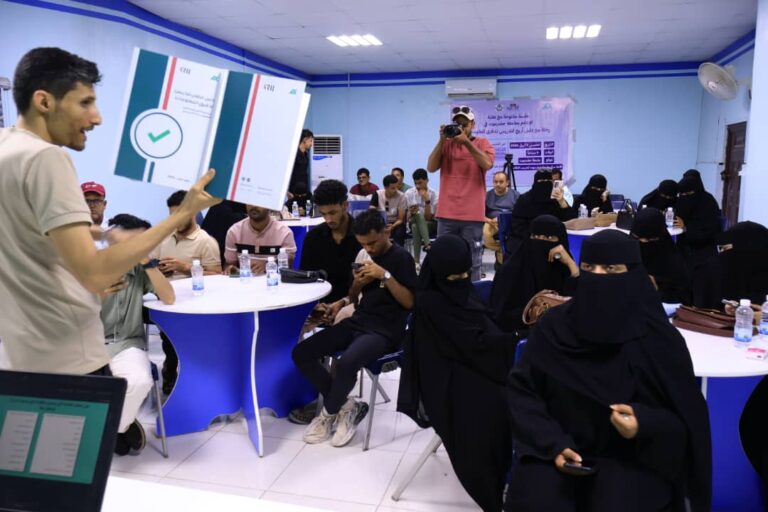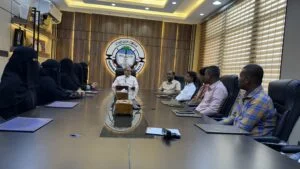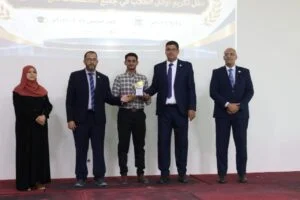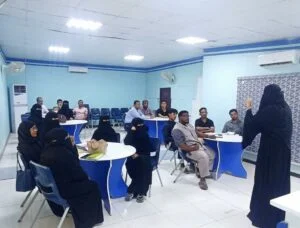
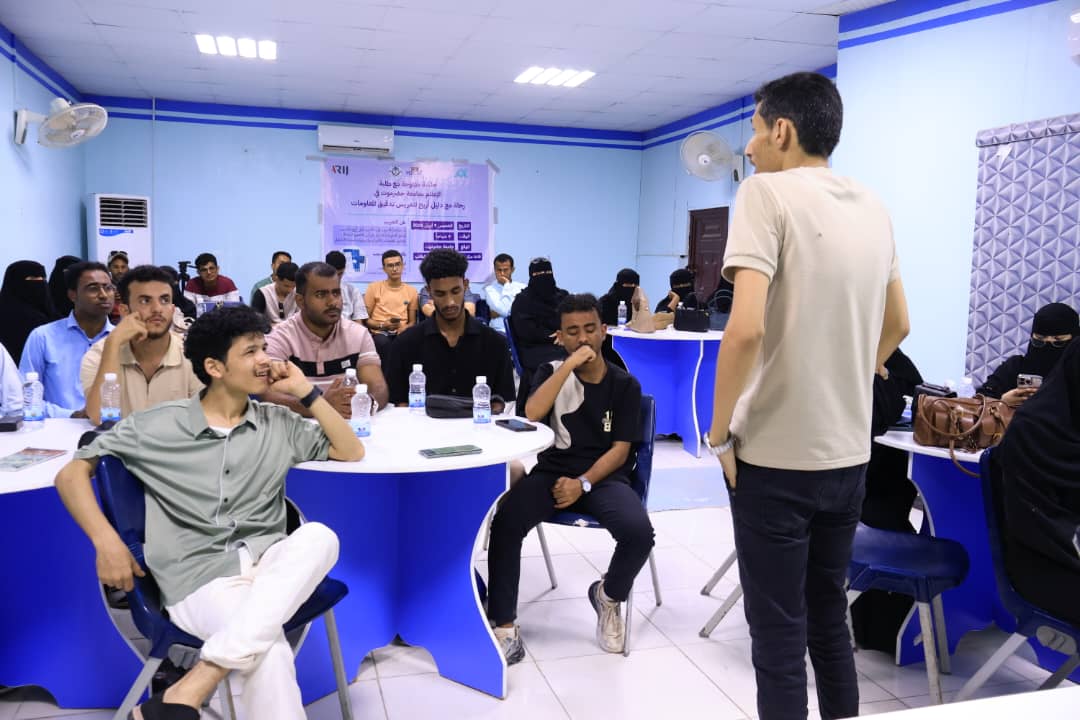
The Department of Media at Hadhramout University organized today an open discussion session for students and graduates of the Media Department titled “The ARIJ Guide to Teaching Fact-Checking.” The session was delivered by Mr. Ahmed Al-Ashwal, a member of the Arab Fact-Checkers Network.
In the opening remarks, the Acting Director General of Media at the University, Dr. Adeeb Al-Shatari, emphasized the critical importance of acquiring fact-checking skills amid the overwhelming flow of news and information. Dr. Al‑Shatari revealed the University’s intention to organize a series of specialized training courses in cooperation with the ARIJ Network, aimed at enhancing students’ cultural and informational awareness in line with the requirements of the modern journalism job market and equipping them with practical tools to ensure professional success.
For his part, Mr. Al‑Ashwal reviewed key concepts of open-source journalism, describing open sources as a “valuable treasure” for uncovering facts. He addressed fact-checking methodologies both before and after publication, warning against the dangers of rushing to disseminate news without verification and the serious consequences that may result. He stressed that “fact-checking is not merely an additional skill, but an ethical shield that protects both journalists and their audiences from the misinformation of the digital age.”
He also affirmed that the ARIJ Forum opens broad horizons for networking and building platforms that rely on young people’s capabilities, highlighting the importance of using globally trusted sources that facilitate rapid communication and expand international professional relationships.
The session featured interactive discussions, real-life examples, and technical solutions, and concluded by urging students to rely on professional guidelines as a fundamental reference to ensure the accuracy and integrity of media content.
It is worth noting that this session marks the first collaborative activity between the University’s Department of Media and the ARIJ Network. It comes as part of the University’s efforts to promote digital awareness, combat fake news, and link academic curricula with modern technological developments in order to better prepare graduates for competitiveness in the labor market.