Mukalla – University Media Center
The Faculty of Environmental Sciences and Marine Biology at Hadhramout University has launched a specialized training program aimed at developing national expertise in Nile tilapia aquaculture, as part of broader efforts to strengthen food security, promote sustainable livelihoods, and support the development of the fisheries sector in Hajar District.
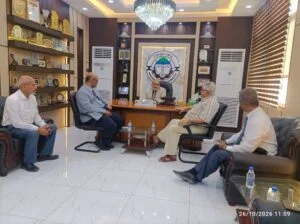
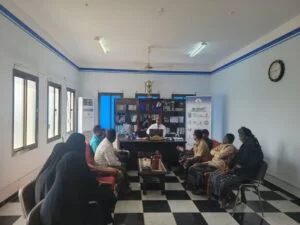
Speaking during a meeting held today at his office with participants enrolled in the training program, Prof. Khaled Al-Rubaki, Dean of the Faculty, highlighted that Nile tilapia farming represents a significant step toward meeting the needs of local communities and advancing the fisheries sector in the district.
The meeting was held in conjunction with the implementation of the project entitled “Providing Technical Support, Nile Tilapia Fry Production, and Capacity Building for Tilapia Farming in Hajar District,” which is being carried out in partnership with the Food and Agriculture Organization of the United Nations (FAO) and funded by the Government of the Netherlands.
Prof. Al-Rubaki expressed his appreciation for the fruitful partnership with FAO, emphasizing the project’s strategic importance in empowering national professionals and transferring scientific and practical knowledge to the field. He encouraged trainees to make full use of the skills and expertise the program provides and apply them professionally to ensure the project’s success and long-term sustainability.
The initiative forms part of the broader “Integrated Watershed Management through Improved Governance, Resilience, and Sustainable Agriculture in Yemen – Wadi Hajar” project, implemented by FAO with financial support from the Netherlands.
The project seeks to promote aquaculture development, strengthen food security, support sustainable livelihoods, and direct scientific research toward enhancing local economic development and national capacity building. It is also expected to contribute to household income generation and create new employment opportunities within the agricultural and fisheries sectors across the governorate.
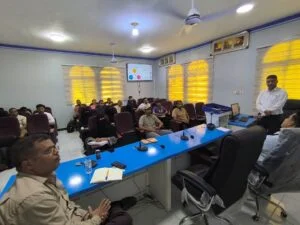
The five-day training program, which commenced today, combines both theoretical and practical components covering a range of specialized topics, including:
- Nile tilapia biology and breeding principles.
- Fish pond management techniques.
- Water quality monitoring and control.
- Modern feeding systems and nutrition practices.
- Disease prevention and health management.
- Harvesting techniques and best practices for post-harvest handling.
Dr. Ahmed Aydhah Bin Al-Haj, Vice Dean for Academic Affairs; Dr. Ahmed Balqadi, the course trainer; Mohammed Bashadi, Faculty Secretary; aquaculture technicians Bassem Badhrous and Shaker Aram; and Muadh Bakathir, the Faculty’s Media Officer, attended the meeting.
This initiative reflects Hadhramout University’s continued commitment to linking academic expertise with community development priorities, while supporting sustainable economic growth through applied research, professional training, and strategic international partnerships.