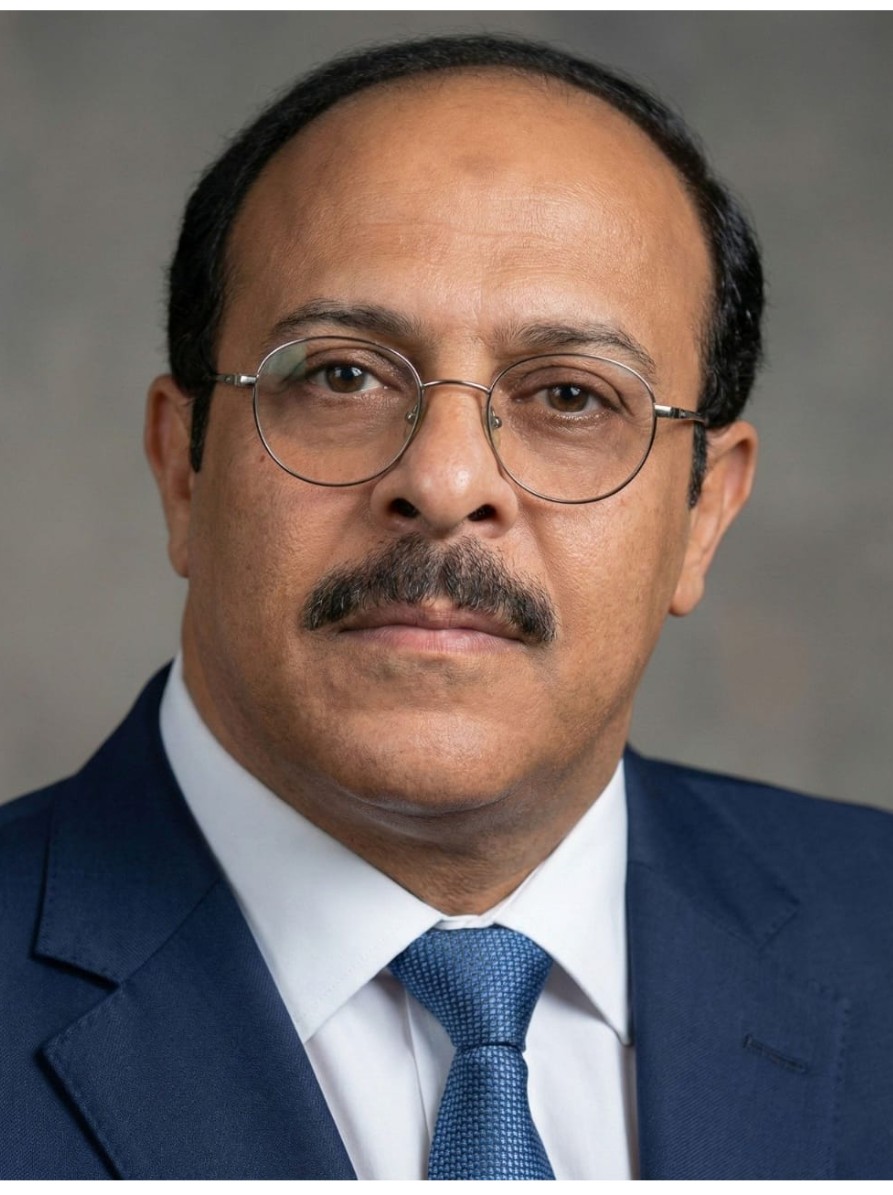
Prof. Dr. Khaled Bawazir
Hadhramout University stands as a vivid model of comprehensive academic vitality and distinguished external relations. Since its inception under the leadership of its founding president, Professor Dr. Ali Hood Ba’abad—who assumed office in 1995 armed with nothing but determination and vision—the University has embarked on an ambitious and transformative journey.
Dr. Ba’abad exerted extraordinary efforts in laying the foundational pillars of the University, including the establishment of faculties, construction of buildings, recruitment of academic staff, equipping laboratories and libraries, and training administrative personnel. The University’s journey began in a single building in the city of Mukalla and gradually expanded to encompass full construction and administrative units, evolving into a fully integrated academic institution that is today widely recognized and highly regarded.
In 2026, this momentum continues under the leadership of the current President, Professor Dr. Mohammed Saeed Khanbash. Hadhramout University now occupies an advanced position among Yemeni universities in terms of academic and research performance at both national and international levels. Compared to universities across various governorates, Hadhramout University stands out as one of the most dynamic institutions, a vitality reflected in the following key areas:
First: Academic and Qualitative Scientific Activity
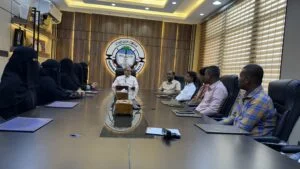
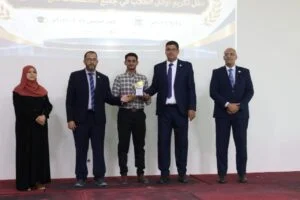
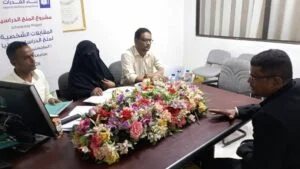
Statistical indicators reveal a substantial volume of annual academic events, most notably:
- Scientific Research Week: An annual academic showcase celebrating high-quality research outputs.
- International Events: The organization of five international events annually in partnership with prestigious global universities.
- Quality Week: Comprising five specialized activities aimed at institutionalizing academic excellence standards.
- Academic Development Week: Including six events focused on enhancing faculty teaching competencies.
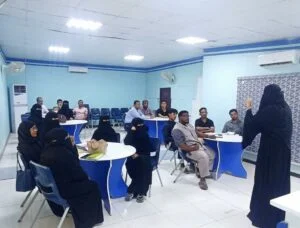
- Community Service Week: Featuring five workshops addressing local community needs.
- University Student Week: A renewed annual tradition distinguished by innovative and creative programs each year.
Second: Expansion of Graduate Studies
Graduate programs (Master’s and PhD) have witnessed significant expansion across all faculties, reaching a total of 55 programs. This growth, together with the diversity of undergraduate programs, has contributed to attracting increasing numbers of students, benefiting from the stability and security characterizing the Hadhramout coast despite the exceptional circumstances facing the country.
Third: External Relations and International Cooperation
The University’s leadership has achieved remarkable progress in activating scientific cooperation agreements, which have reached nearly 100 agreements, yielding notable outcomes such as:
- Joint research projects with leading universities in Malaysia, Indonesia, and Brunei.
- Student exchange programs with Universiti Teknologi PETRONAS (Malaysia) and the University of Padua (Italy).
- Joint supervision and defense of doctoral dissertations in cooperation with universities of the Russian Federation.
- Organization of 14 international conferences in partnership with the Mediterranean Universities Union and European Union universities.
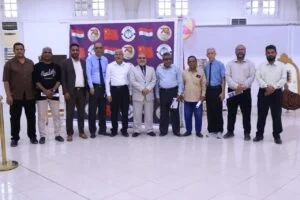
These efforts culminated in Hadhramout University’s inclusion in the QS World University Rankings over the past two years, and were further crowned by its recognition in the Sultanate of Oman in October 2025 as the first Yemeni university to be honored on this international platform—an achievement that reflects its growing global standing.
Fourth: Social Responsibility and Medical Services
Despite limited resources and financial constraints imposed by the current situation, the University has not abandoned its ambition to complete its facilities in the city of “Falak” and the University Hospital. At present, the University plays a vital role in providing medical services through its University Hospital at the Ibn Sina Medical Complex and the University Health Center across various specialties—both of which serve as exemplary models in organization and service delivery for university affiliates and the wider community alike.
Conclusion
The ambition of Hadhramout University knows no bounds. In spite of challenges, the University’s leadership and staff continue to exert their utmost efforts to consolidate its role as a beacon of knowledge and enlightenment within Hadhramout society and beyond.
And God is the grantor of success.