Hadhramout University Media Center
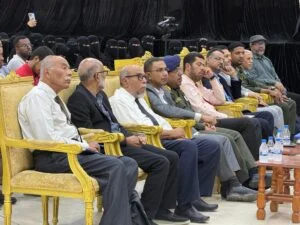
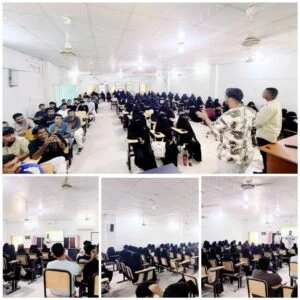
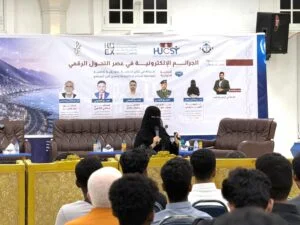
The Hadhramout University Student Training Center organized a scientific seminar today titled “Cybercrime in the Age of Digital Transformation: Understanding the Local Reality and Exploring Future Responses” as part of the Information Technology and Digital Payment Exhibition. The event was attended by Prof. Salem Al-Obthani, Vice President for Student Affairs; Prof. Salem Bamasoud, Vice President for Graduate Studies and Scientific Research; and several university officials, faculty members, students, and individuals interested in technology and cybersecurity.

The seminar was based on the findings of a field study entitled “Cybercrime and Its Impact on Hadhrami Society: An Analytical Study of Mukalla City,” conducted by Prof. Naziha Mohammed Al-Aydaroos, Professor of Data Security at Hadhramout University and Director of the University Student Training Center. The study surveyed 427 residents of Mukalla with the aim of examining the current reality of cybercrime, its patterns, causes, impacts, public awareness levels, and the challenges associated with reporting and addressing cyber-related offenses.
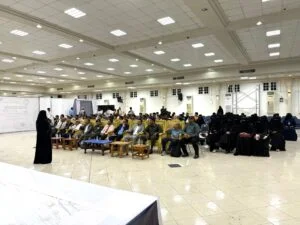
The seminar presented an overview of the study’s key findings and indicators, followed by a panel discussion entitled “Interpreting the Study Findings: Toward an Integrated Vision for Combating Cybercrime and Enhancing Community Security.” The session was moderated by media professional Ayman Bahameed and featured the participation of a distinguished group of academics and specialists from the fields of security, law, judiciary, psychology, sociology, and information technology.
The discussion examined the study’s results from multiple perspectives, including the prevalence and patterns of cybercrime, reasons for underreporting incidents, legislative and enforcement challenges, the importance of awareness and prevention measures, and ways to develop a more integrated response involving academic, security, judicial, legal, and community institutions.
The seminar concluded with several recommendations, including the integration of cybersecurity concepts into university curricula, expanding awareness and educational campaigns, simplifying procedures for reporting cybercrimes, strengthening cooperation between academic, legal, and security institutions, and developing legislation and response mechanisms capable of keeping pace with the rapidly evolving digital environment.
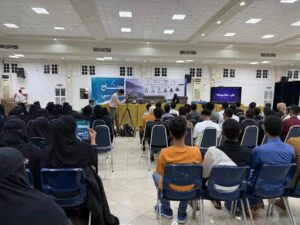
On this occasion, Prof. Salem Al-Obthani emphasized that organizing such seminars reflects the University’s commitment to raising awareness of digital risks and preparing students to meet the challenges of the digital era through specialized educational and training programs.
For her part, Prof. Naziha Al-Aydaroos explained that the significance of the seminar lies in transforming scientific research findings into constructive expert dialogue, allowing study results to be examined from academic, technical, security, legal, judicial, psychological, and social perspectives. This multidisciplinary approach, she noted, contributes to developing a more comprehensive vision for combating cybercrime and strengthening community security.
The seminar was attended by several deans, university officials, faculty members, students, and individuals interested in technology, law, cybersecurity, and digital transformation.